

A cash wedding registry used to be the awkward option. In 2026 it is the common one. Three in four couples who register with The Knot include a cash fund, according to The Knot Worldwide's 2026 Annual Registry Study, and Zola, announcing its 2026 First Look Report, puts the share at 87%. This guide goes through what the two surveys found, what guests actually give, what the money ends up paying for, and the one place a registry still does not belong: the invitation card itself.
Of couples include a cash fund on their registry. 41% say cash is the gift they want most.
The Knot Worldwide, 1,759 couplesOf couples marrying in 2026 are adding a cash fund to help pay for the wedding itself, up from 16% in 2025.
Zola, 11,500+ couplesAverage wedding gift, with most guests giving between $100 and $150.
Zola, citing its 2026 First Look ReportMost couples now have a cash fund, and the two surveys do not agree on how many
The Knot Worldwide released its 2026 Annual Registry Study on July 29, 2026. It surveyed 1,759 engaged and married members with wedding dates between April 2025 and December 2026. In that group, 75% include a cash fund on their registry, 41% say cash is the gift they want most, and 56% combine traditional gifts with cash funds in one registry. The study also lists what still gets registered the old way: bakeware (79%), cookware (75%), bath items (73%) and bedding (69%).
Zola's number is higher. In the press release for its 2026 First Look Report, built on a survey of more than 11,500 couples getting married in 2026, Zola says 87% of couples now include at least one cash fund. The gap between 75% and 87% is real, and the likely reasons are who was asked and how. The Knot's sample includes couples already married in 2025, while Zola's is made up entirely of couples still planning a 2026 wedding. The Knot asked its members whether their registry includes a cash fund, while Zola counted couples with at least one cash fund of any kind, including funds for a home down payment, which 38.9% of Zola's couples register for. Read together, the two surveys say the same thing: a cash fund is now the normal part of a registry, not the exception.
What the money is for is changing
The Knot's study followed the cash after the wedding: 31% of gifted cash is spent on a honeymoon, 18% goes into general savings, and 4% goes toward a down payment on a home. Zola found a newer use. Among couples marrying in 2026, 27% are adding cash funds to their registry to help pay for the wedding itself, which Zola calls a sharp jump from 16% in 2025. Zola's own figures also show why that fund does not go very far.
Here is our arithmetic, using only Zola's numbers. Zola reports an average guest count of 145, an average wedding cost of $36,000, and an average gift of $130 per guest. If every one of the 145 guests gave $130 on their own, the gifts would come to $18,850, or about 52% of the average budget. Guests who come as a couple usually give one gift, and Zola's own gift guide suggests $150 to $200 or more for close family and the wedding party. Assume, as an illustration, 90 households among those 145 guests: at $130 each the gifts come to $11,700, about a third of the budget; at $200 each, $18,000, about half. Cash gifts can soften a bill. On the averages, they do not pay it.
| Figure | Who found it |
|---|---|
| Include a cash fund (Zola: at least one) | The Knot 75% · Zola 87% |
| Cash is the gift they want most | The Knot 41% |
| Traditional gifts and cash together | The Knot 56% |
| A fund to help pay for the wedding | Zola 27%, up from 16% |
| Average gift from a guest | Zola $130 |
Two surveys, side by side: The Knot Worldwide asked 1,759 couples with wedding dates from April 2025 to December 2026; Zola asked more than 11,500 couples marrying in 2026. Each published its own questions, so a figure from one survey has no counterpart in the other.
Couples say asking for cash is fine. Guests want it to be easy
The question most couples actually have is whether it is rude. Zola asked couples, not guests, and 86% of couples say asking for cash gifts is acceptable. The Emily Post Institute's position is older and simpler: it has always been acceptable to give cash or a check, and a couple may let it be known that money would be welcome, passed on by word of mouth the same way registry details are, through close family and the wedding party.
What guests care about is friction. In The Knot's study, 89% of couples say ease of use for guests is the most important factor in a cash fund. In its Venmo announcement, The Knot Worldwide added that 68% of couples want to be able to track all of their gifts in one place. That is the reasoning behind that announcement on June 15, 2026: Venmo is now a payment option inside The Knot's registry, which the company describes as a free way to send money from a bank account, debit card or Venmo balance. At launch the option was available only in The Knot's app, for iOS and Android.
Where the registry goes, and where it does not
The one rule that has not moved: registry information does not go on the wedding invitation. The Emily Post Institute's registry guidance says there is never any mention of registry information on a wedding invitation, and points couples to word of mouth and to the wedding website instead. The practical reason is the same as the etiquette one. The card is an invitation to a day; the registry is an answer to a question some guests will ask later. Our guide to what to put on a wedding invitation covers what does belong on the first screen, and our etiquette guide has the short answers on gifts and plus-ones.
I've spent more than fifteen years behind a camera, a lot of it at weddings. At one wedding, guests kept asking the same things: where to park, when the ceremony starts, the address of the restaurant. The couple spent their day answering texts. Where to send a gift is one more of those questions, and it should have an answer a guest can find without asking.
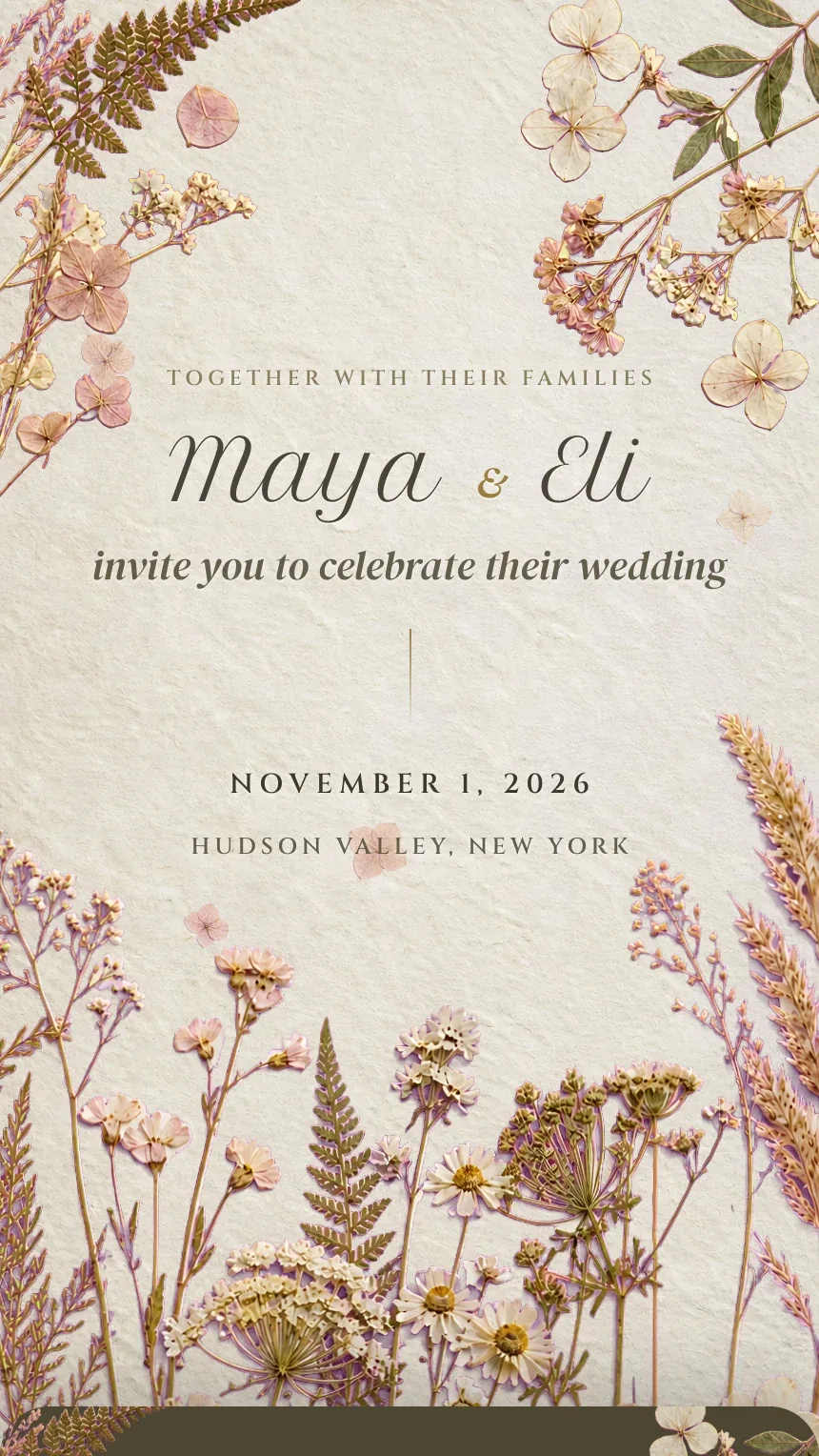
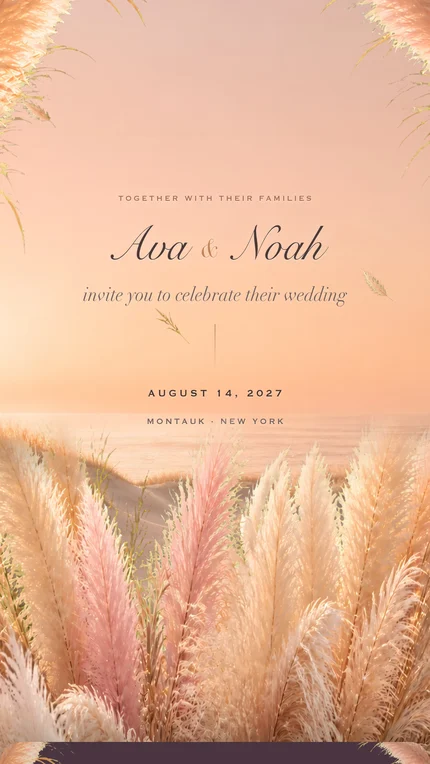
The invitation is the wedding website. One link, no login, no account. That is how we built The Digital Envelope's Classic and Signature digital wedding invitations, so the registry has a place that is not the card. Below the schedule, the venue and the places to stay there is a Gifts section with three parts: a line about gifts, which you pick from seven ready-made sentences or write yourself; a button to your registry, wherever you made it, with the label you choose, so it can say "Our list at Target" instead of a generic name; and a honeymoon fund, entered as a Venmo handle or a full PayPal.me link, which opens as plain text under a small "Prefer to contribute directly?" line only when a guest taps it. If you leave both the link and the fund empty, the section does not appear at all. Save the Date, the $29.99 version, carries no sections, so this applies to the $99 and $199 invitations, each paid once. If you are weighing a separate wedding website against one link, this comparison goes through it.
After the gift: the thank-you
Cash gifts still get a thank-you note, and here the surveys show the same slow shift as everywhere else. In Zola's 2026 etiquette data, 56% of couples say digital thank-you notes are acceptable, and Zola itself still points to handwritten notes as the safe choice. A quick message the same week, followed by the handwritten note, is better than a note that never comes. Whatever the form, name the gift in it. For a cash gift, say what it went toward, because that is what the guest will want to know.
Gifts are one side of the money. The other side, what each guest costs you, is in our guide to wedding cost per guest.
Everything in one place, so nobody has to call you. The registry, the fund and the reply sit in the same invitation as the date.
See the designsHow we put this together. On October 9, 2026 we read The Knot Worldwide's release on its 2026 Annual Registry Study (July 29, 2026) and its release on the Venmo integration (June 15, 2026), Zola's 2026 First Look Report (updated March 19, 2026) with its press release of January 27, 2026, Zola's pages on modern wedding etiquette (updated January 28, 2026) and on how much to spend on a wedding gift (updated June 5, 2026), and the Emily Post Institute's registry rules. The arithmetic on gifts against the average budget is our own, with its assumptions stated, shown step by step. Every figure was checked against the original page before publishing.
- The Knot Worldwide, The Knot Worldwide Releases 2026 Annual Registry Study, July 29, 2026
- The Knot Worldwide, The Knot Worldwide Announces Integration with Venmo to Deliver Seamless Gifting Experiences for Couples and Guests, June 15, 2026
- Zola, 2026 Wedding Trends: Zola's First Look Report, updated March 19, 2026
- Zola (PR Newswire), Gen Z Enters the Wedding Chat: Zola Releases 2026 First Look Report, January 27, 2026
- Zola, Modern Wedding Etiquette: What's Actually Acceptable in 2026?, updated January 28, 2026
- Zola, How Much to Spend on a Wedding Gift as a Guest, updated June 5, 2026
- The Emily Post Institute, Inside Weddings: Registry Rules, read October 9, 2026
Questions people ask
- Is it rude to ask for cash instead of wedding gifts?
- Not by today's standards. In Zola's 2026 survey, 86% of couples called it acceptable, and the Emily Post Institute has long held that cash and checks are proper gifts. The manners are in the how: no amount, no demand, a named purpose, and a traditional list next to it for guests who prefer a box.
- How much do wedding guests give in 2026?
- Zola's guide on how much to spend, citing its 2026 First Look Report, puts the average gift at $130, with most guests between $100 and $150. Closer family and the wedding party tend to give more, and a couple invited together usually gives one larger gift.
- Can we put our registry on the wedding invitation?
- No. The Emily Post Institute's rule is that registry details never appear on the invitation, and that has not changed. Put them on the wedding website or the details part of a digital invitation, and tell parents and the wedding party where to point people.
- Should a cash fund say what it is for?
- Yes. The Knot's study shows most gifted cash goes to a honeymoon, savings or a home, and a guest giving toward something named feels part of it. A fund labeled only as cash reads colder than a fund for a trip to Portugal or a first kitchen.
- Do guests pay a fee on a cash fund?
- It depends on the registry and on how the guest pays, and the terms change. The Knot Worldwide described its Venmo option, launched in June 2026, as a free way to send money from a bank account, debit card or Venmo balance; other payment routes have their own terms. Open your own fund as a guest and read the payment screen before you share it.
- Where does the registry go on a Digital Envelope invitation?
- In the Gifts section, below the date and schedule, on the Classic ($99) and Signature ($199) invitations. You write one line about gifts, add your registry link with a button label you choose, and can add a honeymoon fund as a Venmo handle or PayPal.me link. Leave the link and the fund empty and the section is not shown.