

I run weddings for a living, and the reply card is where most of my Tuesday afternoons go. Not the reception, not the flowers: the chasing. So here is the version of RSVP wording that gets replies back, and the short list of questions that actually help on the day. Everything else I would leave off.
The reply line itself
One sentence, a date, and a clear way to answer. That is the whole job. Pick the tone that matches your invitation and do not mix them.
The favour of a reply is requested by the fifth of September.
Kindly reply by September 5.
Please let us know by September 5 whether you can join us.
Can you make it? Tell us by September 5.
Reply here by September 5. It takes a minute, and if anything changes, just write to us.
Your invitation is at the link below. The reply is on the page; please answer by September 5.
The four questions worth asking
A reply is not a survey. Every extra question costs you answers. These four earn their place because someone on your team needs each one.
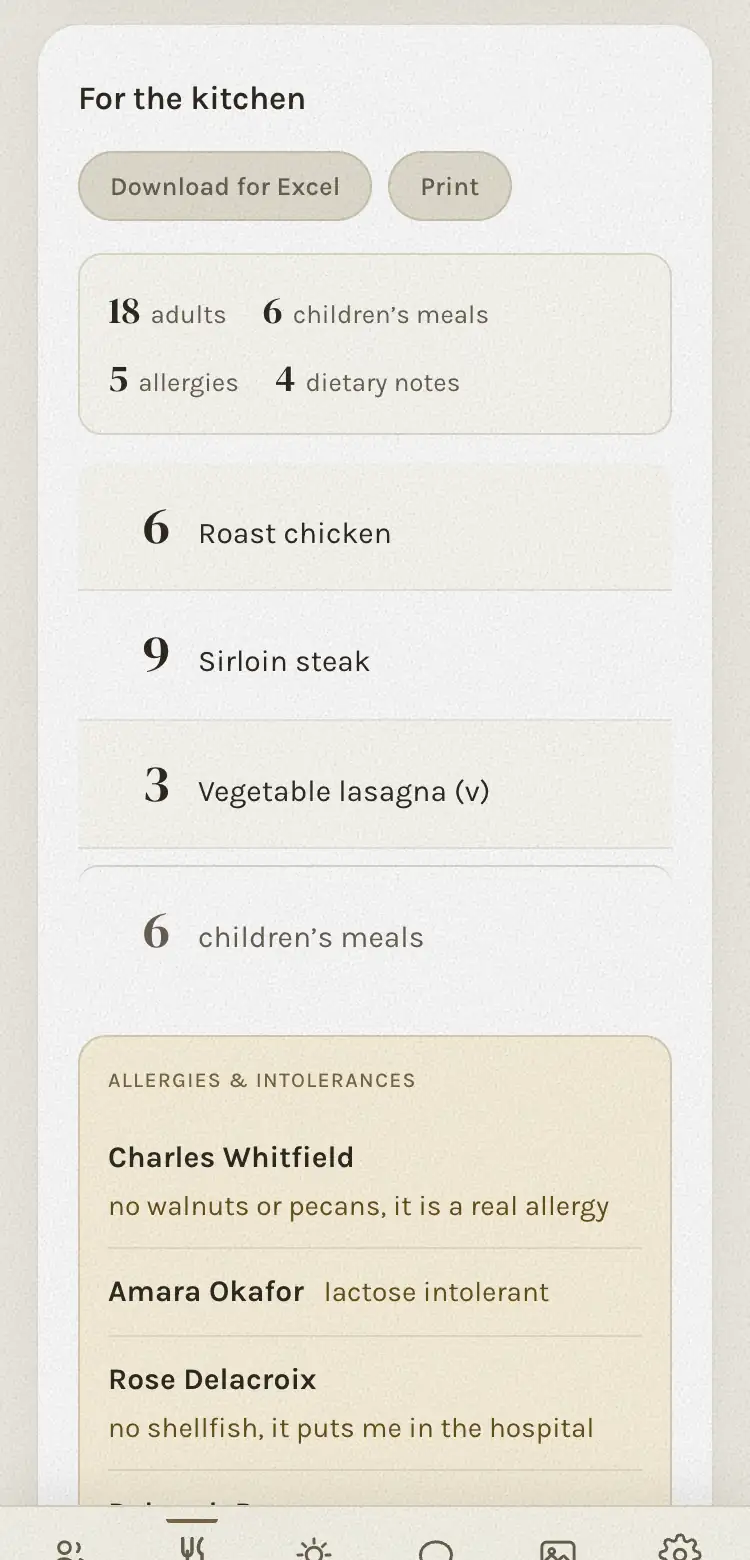
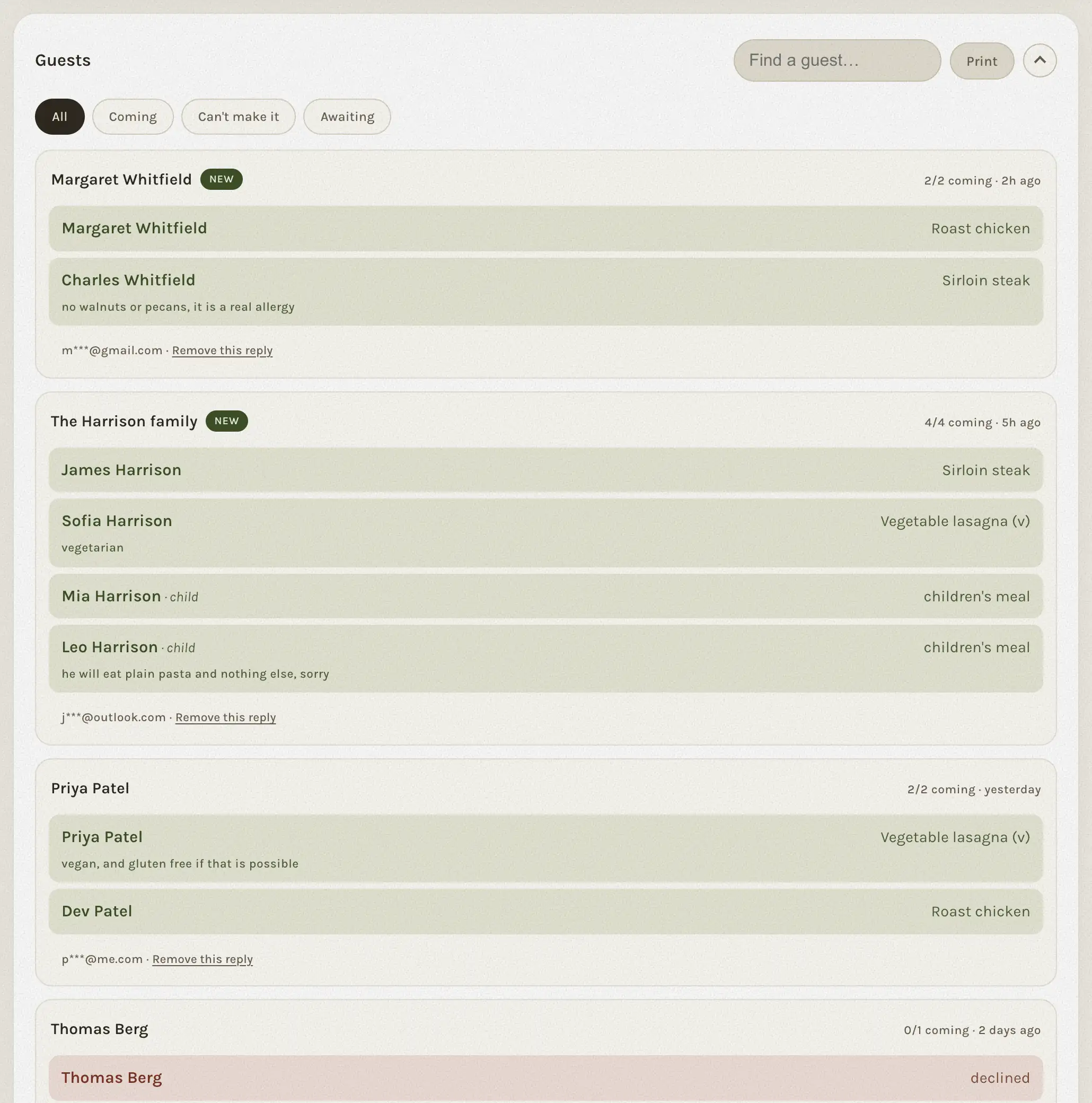
- Are you coming? Yes or no, per person, not per household. "Two of three attending" is a real answer and you need to be able to record it.
- Which meal? Only if you are serving a plated dinner with a choice. Name the dishes plainly: "Roast chicken", "Seared trout", "Wild mushroom tart (vegetarian)".
- Anything we should know about your food? Free text, one line. Allergies come out here in the guest's own words, which is exactly what the kitchen wants. "No shellfish, please; it is a serious allergy" is more useful than a tick box.
- A song you would like to hear. Optional, but it is the one question guests enjoy answering, and the DJ will thank you.
Wording for each question
Joyfully accepts / Regretfully declines. Or simpler: I'll be there / I can't make it.
Please choose one for each guest: Roast chicken with lemon and thyme · Seared trout, brown butter · Wild mushroom tart (v).
Anything the kitchen should know? Allergies, intolerances, or a diet. A few words is plenty.
One song that will get you on the dance floor.
If children are invited: "Please include the little ones by name, so we can plan their meals." If not, say so on the invitation, not on the reply.
A line for us, if you like. (This one gets the best replies of all, and you will keep them.)
What to skip
- Mailing address. You already have it, or you would not be inviting them.
- Phone number. Only if you plan to use it. You will almost certainly never use it.
- Plus-one as a free field. Name the second guest on the invitation instead. An open "and guest" box is how you end up with a stranger at table nine.
- Ten-item menus. Three choices, four at most. The kitchen does not want ten, and neither do your guests.
- Questions about the ceremony versus the reception, unless the guest list genuinely differs. If everyone is invited to both, do not ask.
By household, not by card
The biggest single improvement to any reply is to collect it per household with a line per person. A family of four is one reply with four names, four attendances and four meals. That is how the caterer thinks, how the seating chart thinks, and how the family thinks. A paper card fights this; a reply on the page does it naturally.
If you are sending your invitation as a link, look for a reply that works this way, and one where a guest answers by typing their name from your list, so each name can answer once. It removes the two most common Tuesday afternoons: the duplicate reply and the reply from someone you did not invite.
Sample reply, start to finish
Here is how the whole thing reads on a relaxed invitation, on paper or on the page.
We would love to know by September 5. For each of you: are you coming, and what would you like to eat? Roast chicken · Seared trout · Wild mushroom tart (v). Tell us about any allergies, and give us a song for the dance floor. Thank you for making the trip.
The Digital Envelope makes digital wedding invitations where the reply sits under the invitation itself: by household, a meal for each guest, allergies in their words, a song, and a note. The kitchen list writes itself.
See how the reply worksQuestions people ask
- How do you word an RSVP on a wedding invitation?
- One sentence with a date and a way to answer. Formal: "The favour of a reply is requested by the fifth of September." Relaxed: "Can you make it? Tell us by September 5."
- What questions should a wedding RSVP ask?
- Attendance per person, meal choice if you are serving a plated dinner, dietary needs in a free line, and optionally a song request. Skip address, phone, and long menus.
- How many weeks before the wedding should the RSVP deadline be?
- Three to four weeks. The caterer wants final numbers about two weeks out, and you want a week to follow up with anyone who has not answered.
- Should the RSVP be per person or per household?
- Collect it per household with a line for each person. That matches how the caterer, the seating chart, and the family all think about it.
- Can guests change their RSVP later?
- On paper, by calling you. On a Digital Envelope invitation, the same: the guest writes to you and you correct the reply from the dashboard, so the list stays one answer per name.